The Honest Guide to Tractor Horsepower and How Much Hobby Farmers Actually Need
6/22/2026
Horsepower is probably the number one thing hobby farmers fixate on when they start shopping for a tractor, and honestly, it makes sense. You've got land to manage, brush to cut, and stuff to haul, so it feels like more HP is always better. But the truth is, most hobby farmers in West Tennessee need far less horsepower than they think, and buying more than your property actually requires can cost you thousands of extra dollars you don’t need to spend.
Tractor horsepower isn't just a single number either. Engine horsepower is what the engine produces, but PTO horsepower is what actually powers your attachments. Those two figures are always different, and the gap matters when you're running implements like rotary cutters or tillers.
If you’re curious about horsepower and how much hobby farmers actually need, we’ve got an honest guide for you.
The biggest driver of your HP requirement isn't the size of your property. It's the hardest task you plan to do regularly. Mowing is light work. Running a loader through heavy material is moderate. Cutting thick brush or running a large tiller is where things get demanding. Before you settle on a model, make a list of your three most frequent tasks and your most physically demanding task. That combination tells you more than acreage alone ever will.
The 1 Series, specifically the 1025R, is the most popular sub-compact tractor for good reason. It's manageable, affordable, and handles most light property tasks well on 1 to 5 acres. If your main goals are mowing, occasional snow removal, and some loader use, this is a solid starting point.
The 2 Series, like the 2025R, shares nearly identical horsepower but rides on a wider, heavier frame that performs better on rough or hilly ground. That extra stability makes a real difference when you're working uneven West Tennessee terrain.
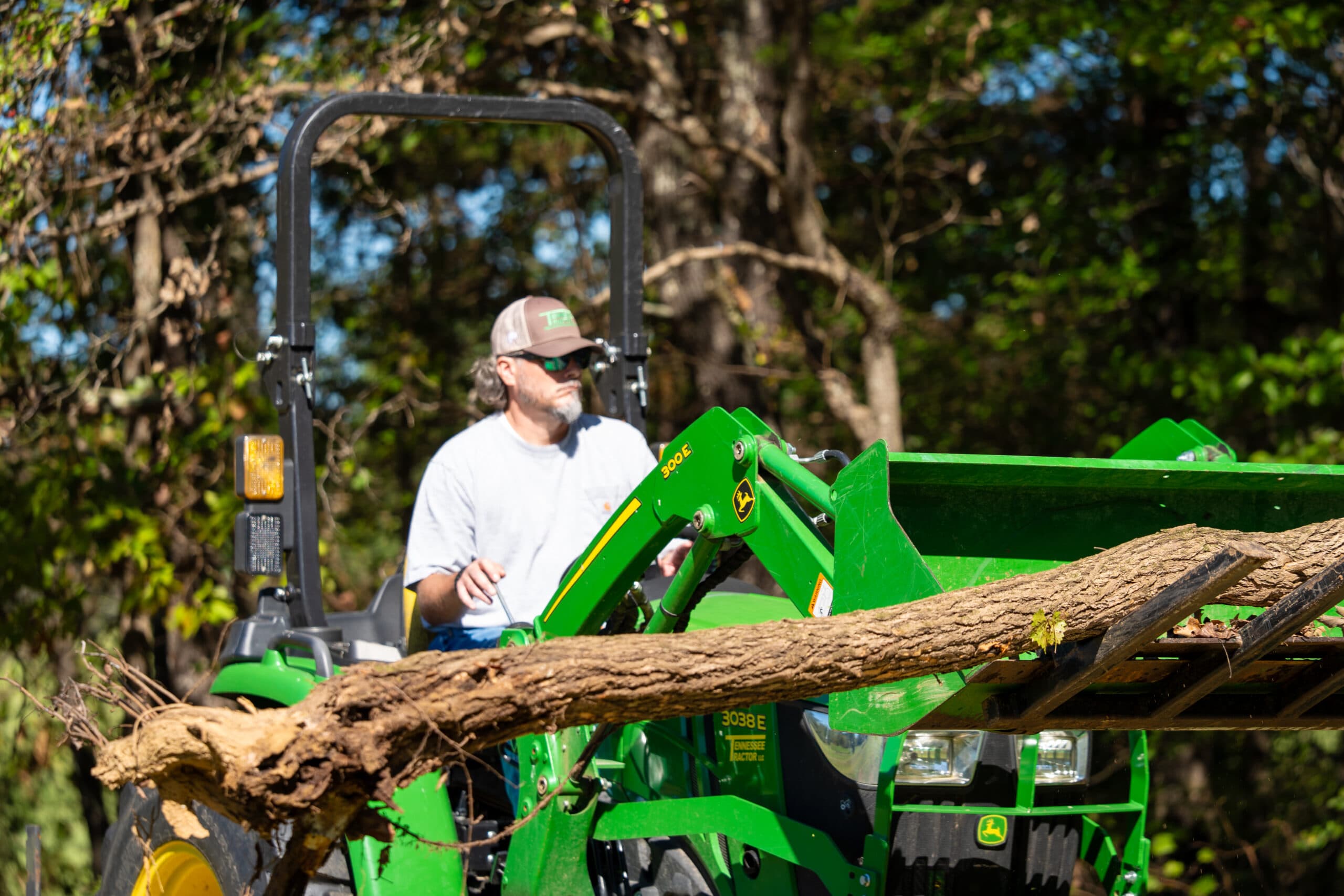
Step up to the 3 Series, and you're in the sweet spot for most hobby farmers with 5 to 25 acres. The 3025E runs 25 horsepower, while the 3038E brings 38 horsepower with a turbocharged engine, and both handle rotary cutters and front loaders with a lot more confidence than sub-compact models. If you're managing pastures, cutting trails, or doing regular fence work, the 3 Series is worth the step up.
The 4 Series picks up from there, with the 4044R at 44 horsepower and the 4066R at 66 horsepower. These are serious machines for larger properties and commercial-level tasks.
| Tractor Series | Engine HP | Best For | Typical Property Size |
|---|---|---|---|
| 1 Series (1025R) | 25 HP | Mowing, light loader work, yard tasks | 1 to 5 acres |
| 2 Series (2025R) | 25 HP | Tilling, grading, uneven terrain | 3 to 10 acres |
| 3 Series (3025E / 3038E) | 25 to 38 HP | Rotary cutting, loader work, fencing | 5 to 25 acres |
| 4 Series (4044R / 4066R) | 44 to 66 HP | Heavy brush, large implements, commercial use | 20 acres and up |
Buying too little is one mistake, but buying too much is just as common. A hobby farmer with 5 acres who purchases a 66-horsepower tractor ends up with a machine that's harder to maneuver in tight spaces, more expensive to maintain, and overkill for everything they actually do. On the flip side, someone who tries to run a 6-foot rotary cutter on a 25-horsepower sub-compact is going to bog down their machine and wear it out faster than they should.
The other mistake is ignoring PTO horsepower. Your engine might produce 38 HP, but what reaches your attachments is different and often lower. Always match your implements to the PTO horsepower rating, not just the engine number. If you're unsure about a specific combination, ask one of our Tennessee Tractor specialists before you buy. It's a quick conversation that can save you from a very expensive mismatch.
If you're building out your first tractor setup and wondering what attachments to pair with your choice, check out our blog on the best compact tractor attachments for Tennessee gardeners and hobby farmers for a breakdown of what works well for each task.
The best way to land on the right horsepower range is to talk through your property and your task list with someone who works with these tractors every day. Our team at Tennessee Tractor serves hobby farmers and landowners across West Tennessee, from Jackson to Brownsville to Somerville and beyond. Stop by a location to walk through the models in person, or browse our current tractor inventory online, and reach out to get a personalized recommendation before you buy.