Spring Creek and Bottomland Management: Best Equipment for West Tennessee Properties
6/10/2026
If you own property along a creek or in a bottomland area in West Tennessee, you already know the drill. Every spring brings a new round of debris, washed-out low spots, and brush that grew back thicker than you left it. The soil is heavy, the ground stays wet longer than you'd like, and the window to get work done before the next rain closes fast. Managing this kind of property takes the right equipment and a plan for when to use it.
Luckily for you, Tennessee Tractor has all the equipment you need to manage spring creek and bottomlands. Let’s dive into what exactly makes this type of land so difficult to manage, and what equipment you need for a successful season.
Bottomland and creek-side properties in Tennessee come with challenges that flat, dry ground simply doesn't. Spring flooding leaves behind debris, eroded channels, and lots of new growth that can take over a cleared area in just a few weeks. Properties near creeks in the Jackson, Brownsville, and Dyersburg areas often deal with thick stands of river cane, privet, and willow that re-sprout every season, no matter how many times they've been cut back.
The soil adds another layer of difficulty. Bottomland stays saturated and muddy well into spring, which puts real stress on equipment and makes it easy to tear up the ground you're trying to improve. You also run a very likely risk of getting stuck in the muck and mire if you don’t have the right equipment. Choosing the right tractor and attachments for these conditions matters more here than almost anywhere else on a property.
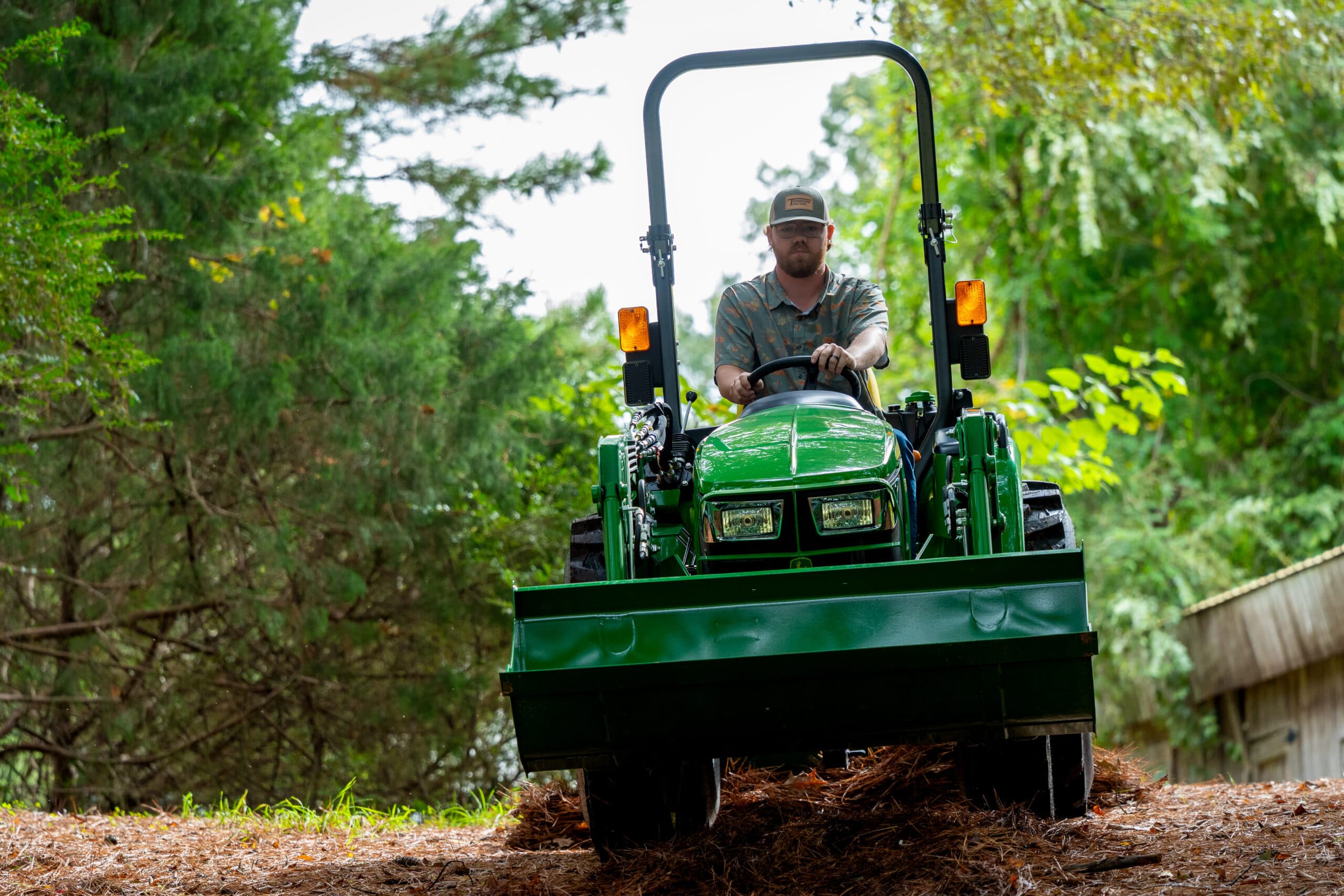
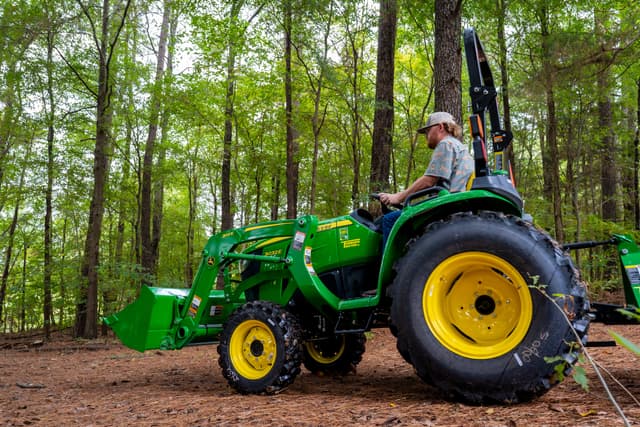
For most homeowners managing creek banks and bottomland, a compact utility tractor in the 25- to 45-horsepower range handles the workload. These tractors are maneuverable enough to work along creek edges without getting into trouble, but powerful enough to push through thick brush and wet soil. Tennessee Tractor carries a great selection of John Deere 3 Series compact utility tractors, which are well-suited for this kind of difficult terrain work. If your bottomland is larger or more heavily wooded, stepping up to a 4 or 5 Series utility tractor gives you more horsepower and stability when the ground gets rough.
The right attachment makes the difference between a full day of grinding work and getting through the job by noon. Here is a look at the attachments that do the most work on creek and bottomland properties:
Tillers: If you want to convert cleared bottomland into a food plot or garden area, a rotary tiller breaks up heavy soil and mixes in organic matter. Frontier tillers in the RT12, RT20, and RT30 series give you options based on tractor size and bed width.
Not every bottomland property needs every attachment. This table breaks down which tools fit which situations:
| Property Condition | Primary Attachment | Secondary Attachment |
|---|---|---|
| Heavy brush and saplings | Rotary cutter | Grapple |
| Flood debris and washouts | Box blade | Landscape rake |
| Rocks and surface debris | Landscape rake | Box blade |
| Logs and large stumps | Grapple | Rotary cutter |
| Planting food plots or gardens | Tiller | Box blade |
Timing matters more on bottomland work than anywhere else. The best windows for this kind of work in West Tennessee are late spring, after soils have dried out from winter flooding, and again in late summer before the ground gets soft. Working saturated soil tears up the surface, compacts the subsoil, and creates ruts that are hard to fix later.
If you are planning fall food plots or trying to establish ground cover along a creek bank to reduce erosion, late summer is a good time to get cleared and seeded.
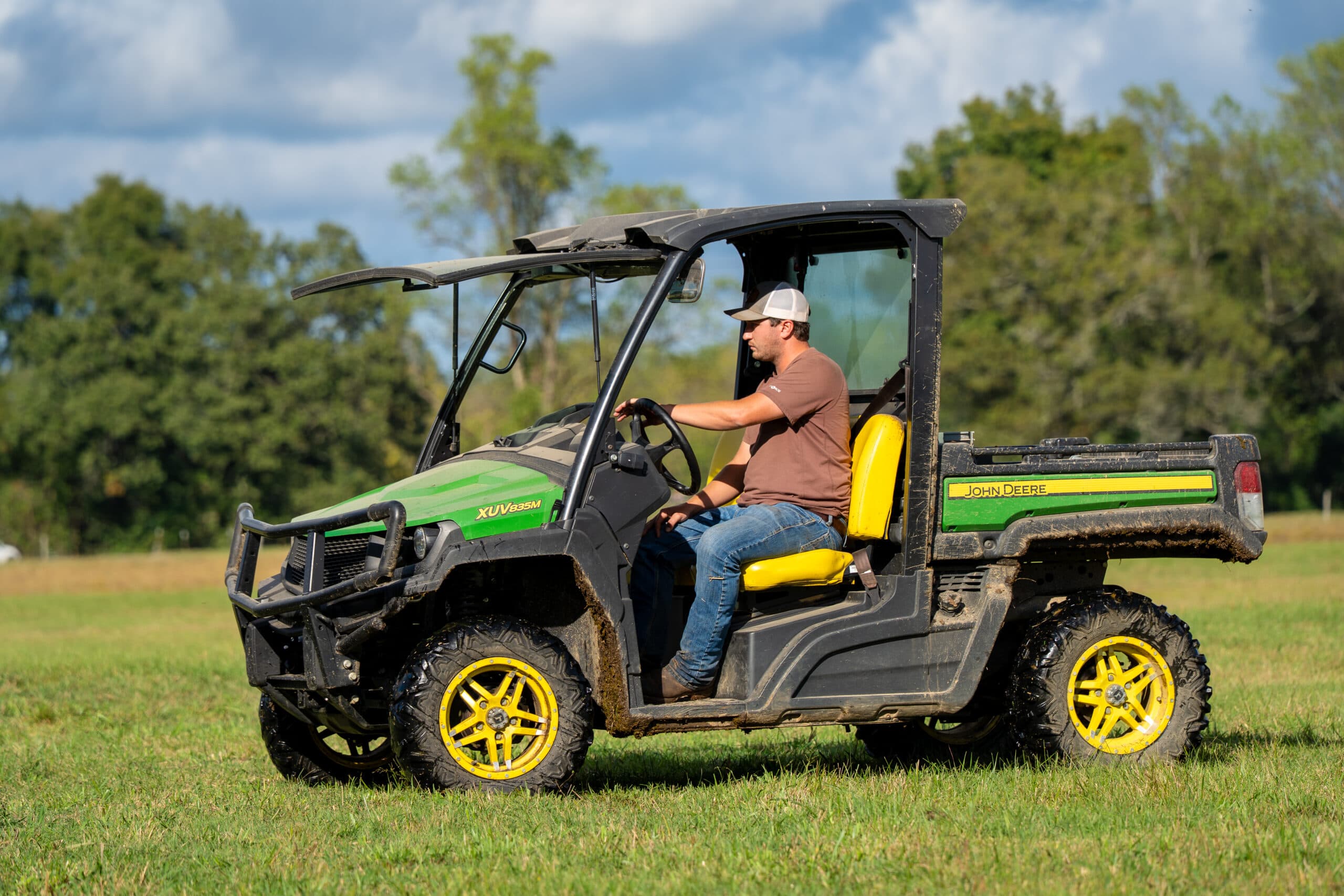
On larger properties, or in areas where a tractor can't safely travel, a utility vehicle fills the gap. The John Deere Gator XUV is a solid option for scouting creek banks, hauling tools and materials, and getting into lower ground that a tractor might bog down in. It's also useful for fence inspection along bottomland fencing, which tends to take a beating every time the water rises.
Bottomland management is a challenge, but the right equipment makes it a manageable one. Tennessee Tractor's team can help you figure out which tractor and attachments fit your property and your budget. Call your nearest location to talk through your options, browse attachments online, or schedule a service visit if you need your current equipment checked out before the season gets going. Tennessee Tractor serves West Tennessee with 10 locations, including Jackson, Brownsville, Dyersburg, Somerville, Paris, and more. Find a location near you.